


Solar power is increasingly asserting its important role in the energy system in Vietnam, contributing to ensuring energy security, reducing dependence on fossil fuels and promoting sustainable development. In particular, the FIT 1 price mechanism is considered an important driving force to attract investment in this field, creating the premise for the explosion of solar power projects across the country.
However, with the end of the FIT 1 incentives, the renewable energy market is facing many challenges, including high investment costs, downward pressure on electricity purchase prices, and changes in support policies. These factors directly impact investor decisions and the future development of the industry.
So what is the specific price of FIT 1, how does it work and how does it affect investors? Let’s find out the details in the article below.
Overview of FIT 1 solar power price

The Feed-in Tariff (FIT 1) played an important role in promoting the development of solar power in Vietnam, helping to attract investment and creating the premise for the boom of the renewable energy industry. However, after the FIT 1 period ended, the solar power market also faced many challenges.
FIT 1 solar power price mechanism
- Preferential price : Apply fixed electricity purchase price for long term, creating stability for investors.
- Scope of application : For rooftop, ground-mounted and floating solar power projects operating before June 30, 2019 .
- Support policy : The government commits to buying electricity at a fixed price for 20 years , ensuring stable cash flow.
Impact of FIT 1 price on the market
Benefit :
- Promote strong investment , making Vietnam one of the fastest developing countries in solar power in the region.
- Reduce dependence on coal-fired thermal power , contributing to environmental protection.
Challenge :
- Power grid overload due to rapid increase in number of projects, causing congestion and reduced power generation.
- FIT prices gradually decrease in later stages , affecting investor profits.
Development orientation after FIT 1
Although FIT 1 has ended, solar power still has a lot of potential. Solutions to focus on:
- Develop energy storage systems to reduce pressure on the grid.
- Optimize self-consumption model to increase investment efficiency.
- Promote rooftop solar power to take advantage of clean energy sources.
FIT 1 has created an important foundation for the solar power industry. To continue to develop, a combination of technology and flexible policies is needed.
FIT 1 price and application mechanism
FIT 1 price plays an important role in promoting solar power development in Vietnam, bringing many significant benefits to investors and the renewable energy industry, including:
- Attractive price : FIT 1 is applied at a preferential price, ensuring stable profits for investors throughout the project life cycle. This is an important driving force to attract capital into the solar power sector.
- Long-term application period : Solar power projects operating before June 30, 2019 will enjoy FIT 1 price for 20 years , creating cash flow stability and optimizing investment efficiency.
- Wide scope of application : FIT 1 mechanism is applied to many types of solar power, including ground-mounted solar power, floating solar power and rooftop solar power , helping to diversify development models.
- Government support : The State commits to purchasing all electricity output from projects enjoying FIT 1 price, ensuring stable output and reducing market risks for investors.
- Promoting clean energy development : Thanks to the FIT 1 mechanism, a series of solar power projects have been deployed, contributing to reducing dependence on fossil energy and protecting the environment.

With the important incentives that FIT 1 brings, this mechanism has created a strong push for the solar power industry in Vietnam, opening up great opportunities for investors and promoting the transition to clean energy in the future.
Impact of FIT 1 price on investors
The FIT 1 price plays an important role in attracting investment in the solar power sector, creating a strong driving force for the development of the renewable energy industry. This policy has brought many benefits but also comes with challenges that investors need to consider.
Benefits of FIT 1 price for investors
FIT 1 price has made solar power projects more attractive, creating many advantages for businesses and investors, including:
- Increased financial stability : With a fixed electricity purchase price for 20 years, investors can predict cash flows and plan long-term finances.
- Accelerated payback : High FIT 1 price helps shorten payback period, facilitating investment expansion.
- Creating strong growth opportunities : A series of solar power projects deployed during the FIT 1 phase have helped many businesses develop rapidly in the renewable energy sector.
- Minimize market risk : The government commits to purchasing electricity at a fixed price, helping investors reduce the risk of electricity price fluctuations.
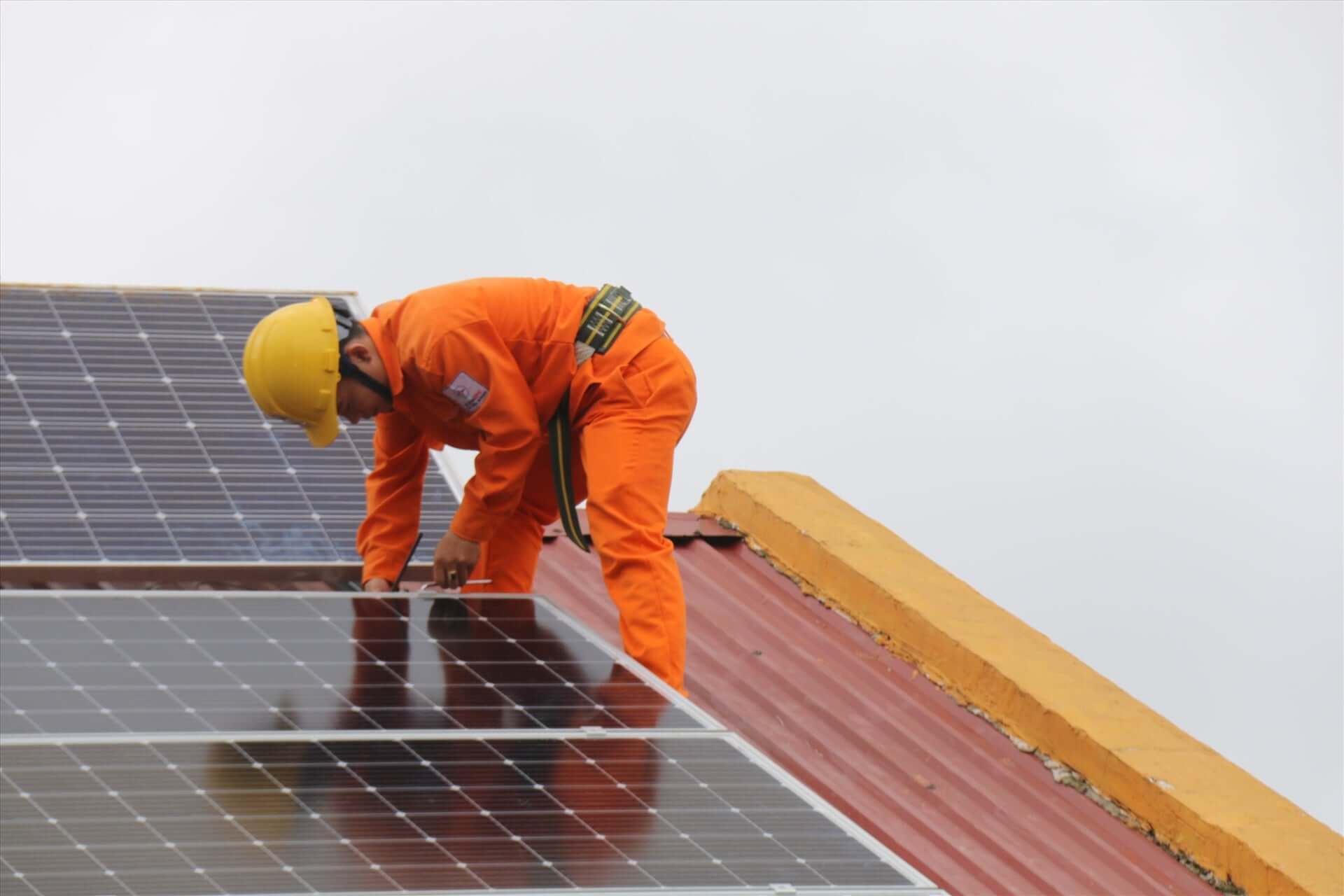
Challenges in applying FIT price 1
Despite its many benefits, FIT 1 also creates difficulties for investors, especially when the solar power market changes after this period ends.
- Grid overload : The massive development of solar power projects leads to grid congestion, causing power generation capacity cuts, affecting investors’ profits.
- Policy change : After FIT 1 ends, the following FIT periods have gradually decreasing prices, reducing the attractiveness of the market and affecting long-term investment decisions.
- Operating cost pressure : Despite high electricity purchase prices, investors still face system maintenance costs, equipment loss and grid connection requirements.
- Increased competition risk : As more businesses enter the solar power market, competition becomes increasingly fierce, forcing investors to optimize costs and improve operational efficiency.
Directions for investors after FIT 1
To maintain profits and continue to grow in the context of changing policies, investors need to apply strategic solutions such as:
- Optimizing self-consumption model to reduce dependence on electricity selling price to EVN.
- Develop a battery energy storage system (BESS) to maximize the output of solar power generated.
- Looking for investment opportunities in rooftop solar power models , where there is still potential for development and incentive policies.
- Proactively adapt to new policies while optimizing operating costs to ensure long-term profitability.
The FIT 1 price has created a big boost for the solar power market, but to maintain the momentum, investors need to flexibly adapt to changes in policy and technology in the renewable energy industry.
Compare FIT 1 price with other FIT periods
Feed-in Tariff (FIT) is an important mechanism in promoting solar power development in Vietnam. However, the FIT price has changed over time, directly affecting the investment strategies of businesses and investors.
Below is a comparison between FIT 1 prices and subsequent FIT periods.
After the FIT 1 phase (2017-2019) ended, the Government adjusted the solar power purchase price to match the market development. The specific changes are as follows:
FIT 1 Price (2017-2019)
Price: 9.35 US cents/kWh (~2,086 VND/kWh)
Scope of application: Projects operating before June 30, 2019
Applicable period: 20 years
Features: Attractive FIT 1 price, helping to boom investment in solar power, but also putting pressure on the grid.
FIT 2 Price (2019-2020)
Price:
- Ground-mounted solar power: 7.09 US cents/kWh (~1,644 VND/kWh)
- Floating solar power: 7.69 US cents/kWh (~1,783 VND/kWh)
- Rooftop solar: 8.38 US cents/kWh (~1,943 VND/kWh)
Scope of application: Projects operating from July 1, 2019 to December 31, 2020
Features: FIT 2 price is lower than FIT 1, causing many investors to recalculate financial efficiency.
FIT 3 Price (2020-2021)
There is no fixed price, instead, solar power prices move to a direct bidding and negotiation mechanism .
Characteristics: Projects must participate in bidding to buy electricity at reasonable prices, no longer enjoying fixed prices as before.
Trends and future of FIT price in solar power in Vietnam

The strong development of renewable energy technology along with the Government’s regulatory policies will shape the future of solar FIT prices in Vietnam. Some prominent trends in the coming time include:
Switch to bidding mechanism
Instead of applying a fixed FIT price, the competitive bidding model will be deployed more widely. This mechanism helps optimize investment costs, ensure reasonable electricity purchase prices and reduce the financial burden on the State.
Developing a self-consumption solar power model
As the FIT price is no longer as high as before, many businesses and households will switch to a self-consumption model instead of selling electricity to the grid. This helps optimize profits, reduce pressure on the transmission system and make the most of solar power.
Application of energy storage technology
Battery energy storage systems (BESS) will play an increasingly important role in optimizing solar power. As storage technology develops, the use of solar power becomes more flexible, minimizing the problem of power curtailment due to grid overload.
Support for rooftop solar development
As large-scale solar power projects face difficulties in connecting to the grid, rooftop solar power will continue to be encouraged. The government can introduce specific preferential policies for this model, helping businesses and households to fully exploit the potential of renewable energy.
Adjust FIT price according to reasonable roadmap
Maintaining a reasonable FIT price, gradually decreasing over time but still ensuring enough attractiveness for investors, will be an important direction in the future. This model has been successfully applied by many countries to maintain the sustainable development of the renewable energy industry.
The future of solar FIT prices in Vietnam will no longer focus on high fixed prices but will move towards bidding mechanisms, optimizing self-consumption and applying storage technology . To make the most of opportunities from this trend, investors need to flexibly adjust their strategies, apply new technologies and effectively exploit business models suitable for the market.
Conclude
This article has analyzed in detail the FIT 1 price, the changes through the next FIT periods and the impact of this policy on investors and the solar power market in Vietnam. Overall, the FIT 1 price has played an important role in promoting the development of renewable energy, but also poses many challenges when this policy changes.
To ensure the sustainable development of the solar power industry, close coordination between stakeholders is needed, including:
- State management agencies : Develop a roadmap for reasonable FIT price adjustment, create a transparent bidding mechanism and support the development of the power grid system to optimize the absorption of renewable energy sources.
- Investors and businesses : Optimize investment costs, apply energy storage technology and shift to self-consumption solar power model to maintain economic efficiency.
- Households and small businesses : Exploit the potential of rooftop solar power, take advantage of support policies to reduce electricity costs and improve energy efficiency.

With the joint efforts of all parties, the solar power industry in Vietnam will continue to develop strongly, contributing to the sustainable energy transition, ensuring national energy security and opening up many investment opportunities in the future.


 Xem thêm








