



Rooftop solar in Vietnam has moved beyond the “install just to have it” phase and entered a second stage: operational optimization and proactive power supply. Investors no longer only want to reduce electricity bills—they also want to:
-
Maximize self-consumption as much as possible, and reduce grid purchases during peak hours
-
Have backup power when the EVN grid is down or unstable
-
Raise safety standards—especially fire safety (PCCC)—particularly for FDI factories, cold storage facilities, and livestock farms
To achieve that, the system needs a critical “missing piece”: a Battery Energy Storage System (ESS).
Today, most systems in Vietnam are still installed in a “mix-and-match” way:
-
An inverter from one brand + a battery from another brand, with the EPC contractor combining them into a “solution.”
This approach can be cost-flexible, but it also introduces multiple risks in terms of system integration, warranty responsibility, and technical documentation.
In that context, AlphaESS appears as a brand focused on fully integrated storage systems—from inverter, battery, and BMS to the management platform. This article will:
-
Introduce who AlphaESS is and how its product lines are grouped
-
Analyze four key application segments that best match market demand in Vietnam
-
Compare AlphaESS with popular configurations (Deye, GoodWe, Huawei, domestic batteries, etc.) under a “same field—same phase—same power—same system type” approach
1. What is AlphaESS? A quick look at its product ecosystem
AlphaESS was founded in 2012 and is headquartered in Nantong (Jiangsu, China). To date, the company has deployed more than 150,000 systems across over 100 countries and regions, with more than 30 global offices/branches. It is one of the few brands that specializes deeply in ESS rather than only selling inverters or solar modules.
What differentiates AlphaESS:
-
A strong focus on integrated storage solutions: inverter, battery, BMS, EMS, and cloud monitoring
-
A continuous product range from residential (5 kW) to containerized MWh-scale systems for C&I and utility applications
From a high-level view, the AlphaESS ecosystem can be divided into three major groups:
1.1. Residential ESS — the SMILE series

SMILE5 from AlphaESS
Targeted at residential homes, villas, homestays, and small offices, including:
-
SMILE-M5, SMILE5 — all-in-one ESS cabinets for residential 5 kW
-
SMILE-G3 (S/T) — single-phase and three-phase hybrid series using high-voltage (HV) batteries with expandable capacity
-
SMILE-B3 & B3-PLUS — AC-coupled solutions that add batteries to existing grid-tied systems
Newer generations such as SMILE-X6 and SMILE-X12 have begun appearing in some markets, inheriting the integrated ESS philosophy with more flexible configurations.
1.2. Balcony & portable
-
VitaPower VT1000 — a “balcony solar” system that plugs directly into an apartment power outlet, with expandable storage capacity
-
BlackBee 1000 — a portable power station for travel, outdoor use, and light backup
This group is not yet a core focus in Vietnam, but it is very useful for telling the story that “AlphaESS is not only about rooftop solar—it also covers lifestyle energy.”
1.3. C&I & Utility ESS
Serving businesses, factories, industrial parks, and microgrids:
-
StaX-M30/M50, STORION-H30/H50-G3 — 30–50 kW ESS cabinets for warehouses, mid-sized workshops, and resorts
-
STORION-TB125 — a liquid-cooled system rated at 125 kW / ~261 kWh, expandable beyond 500 kWh
-
ASTER-5000 — a container ESS around 5 MWh for grid regulation, microgrids, and large farms
Some markets also offer STORION-G2-H50, a newer generation of the H-series.
In Vietnam, the C&I & utility segment still faces many practical barriers (pricing mechanisms, EVN procedures, upfront CAPEX, and ESS interconnection requirements). However, AlphaESS having these solutions in its portfolio is a plus when working with long-term, forward-looking investors.
In the next section, we’ll go deeper into four segments that most closely match current market demand.
2. Segment 1 — Residential 5 kW single-phase + ~10 kWh
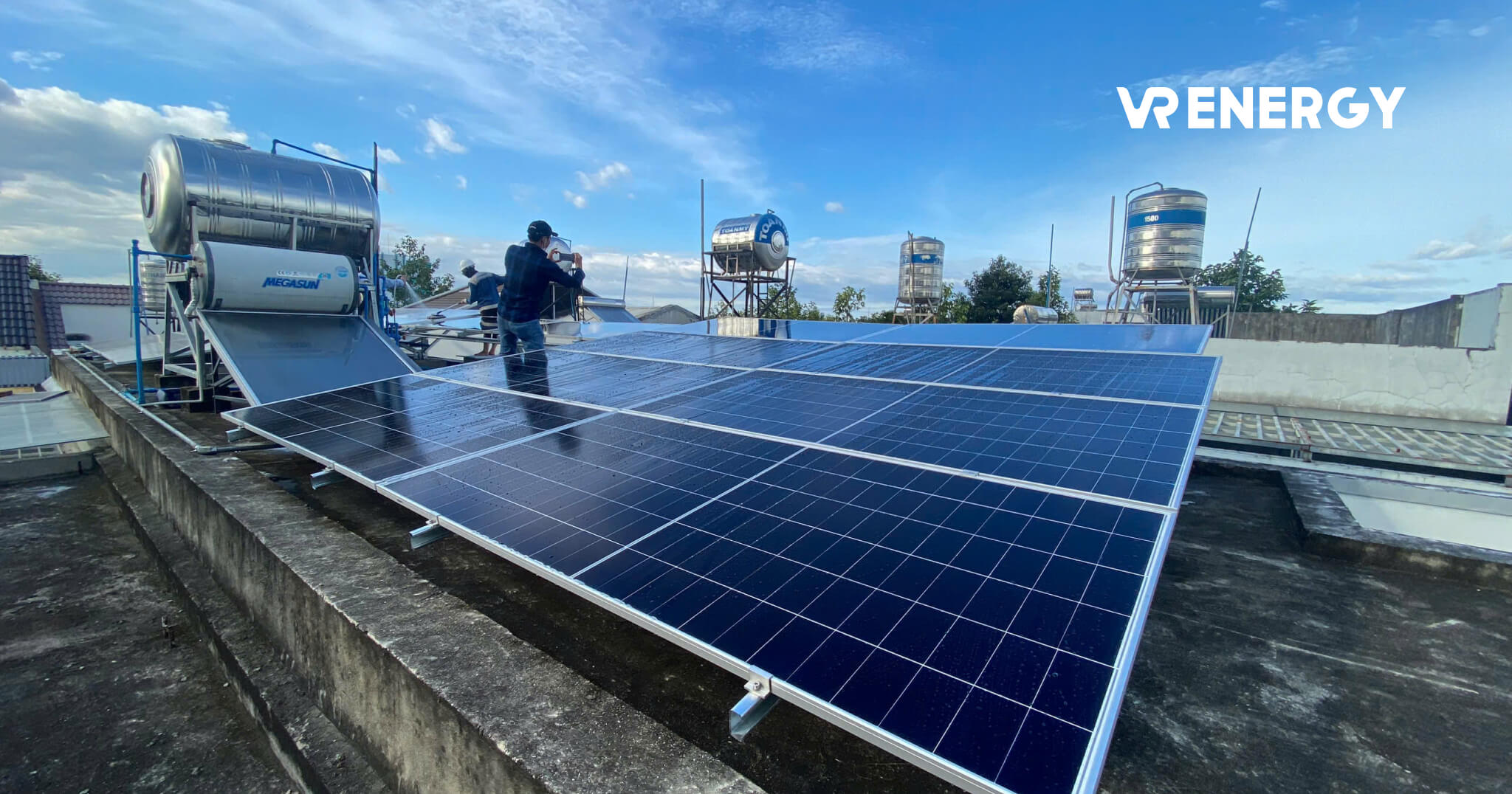
(Example: residential rooftop solar)
2.1. Market reality
This is a very large customer group:
-
3–4 story townhouses using 2–3 air conditioners plus many electric appliances
-
Urban villas, small business households, small homestays
-
Offices sized roughly 80–200 m²
A common configuration that contractors install:
-
A 5 kW single-phase hybrid inverter (Deye, GoodWe, Huawei, etc.)
-
10–15 kWh of batteries—often 48 V LFP batteries stacked as 2–3 modules
Pros: easier to optimize costs, many domestic battery options.
Cons: a “multi-brand cooperative” system—each supplier covers a piece. When warranty issues arise or when FDI-grade documentation is needed, it can be quite demanding.
2.2. AlphaESS in this segment — SMILE-M5 & SMILE-G3-S5/B5
SMILE-M5 — an all-in-one solution for homes
-
A 5 kW single-phase inverter integrated inside a vertical ESS cabinet
-
5 kWh LFP battery modules; standard total capacity 5–20 kWh, with some market configurations allowing expansion up to 25 kWh
-
Compact stackable design, low noise, IP65—can be installed indoors
-
Built-in aerosol fire suppression adds an extra layer of fire safety (PCCC)
-
2 MPPTs, supporting up to around 10 kWp of PV modules—well-suited to common residential rooftops
In terms of user experience, SMILE-M5 feels like “a smart electrical cabinet (distribution board) with everything built in”: connect AC and DC, configure in the app, and it runs.
SMILE-G3-S5/B5 — flexible capacity for villas & homestays
-
SMILE-G3-S5/B5: a 5 kW single-phase hybrid inverter using high-voltage (HV) batteries
-
Capacity can expand from ~10 kWh to 20–30–60 kWh depending on the number of modules
-
Suitable for higher-demand homes: multi-room villas, homestays, large cafés
2.3. Comparison with popular configurations in Vietnam
Placing SMILE-M5 / G3-S5 next to common solutions such as:
-
Deye 5 kW hybrid + 10 kWh battery
-
GoodWe 5 kW ES + 10 kWh battery
-
Huawei 5 kW + LUNA 10 kWh
…we can compare from three angles:
1) Level of integration
-
AlphaESS: inverter, battery, BMS, EMS, and cloud platform are all from one brand → seamless setup, firmware upgrades, and warranty handling
-
Mix-and-match setups: inverter from one brand, battery from another → every troubleshooting case requires checking both sides
2) Safety and aesthetics
-
SMILE-M5 uses LFP, includes aerosol fire suppression, and has a well-designed cabinet that looks like part of the interior
-
SMILE-G3 uses HV batteries but still follows strict safety standards with module-level monitoring
-
Deye/GoodWe/Huawei + domestic batteries can work reliably, but the level of finish (aesthetics, integration, and fire safety documentation) depends heavily on the EPC contractor
3) Cost and customer profile
-
AlphaESS is often priced higher than a hybrid inverter + domestic battery combo, but in exchange you get a fully integrated, international-brand solution
-
For customers prioritizing safety, quality, and long-term use, that cost gap is reasonable
-
For customers whose top priority is the lowest possible upfront cost, “inverter + standalone battery” can still be acceptable—provided installation quality meets standards
3. Segment 2 — Villas & small businesses 8–10 kW
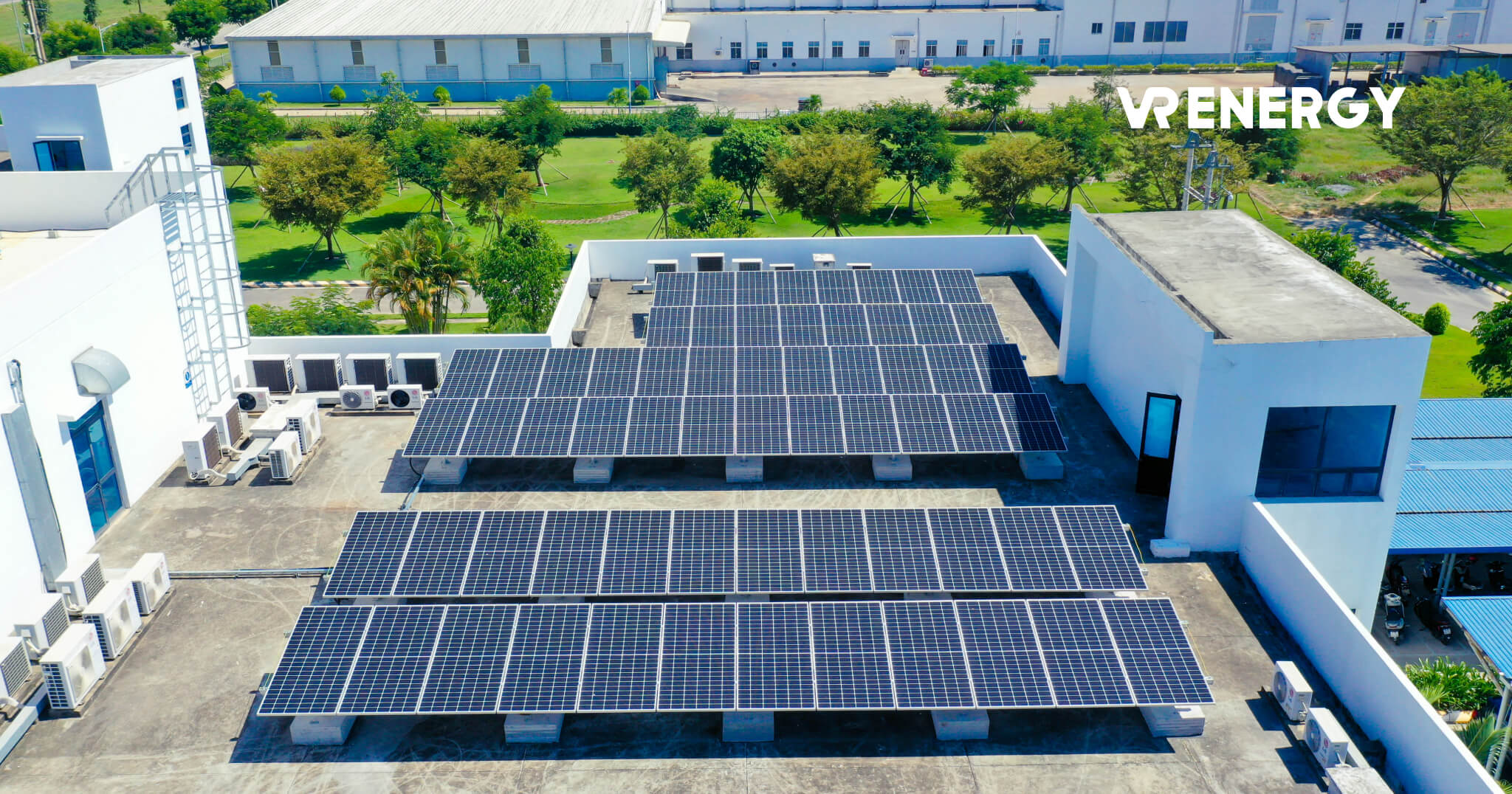
(Example: rooftop solar for a company)
3.1. Real-world demand
This group includes:
-
Large-area villas, vacation villas, homestays with 4–8 rooms
-
Restaurants, large cafés, showrooms, spas
-
Company offices with around 20–50 staff
They typically have two parallel needs:
-
Reduce electricity costs—especially during peak hours—because air conditioning and kitchen loads run heavily
-
Ensure power for critical loads: POS, cameras, IT systems, lighting, water pumps
Typical system sizing is 8–10 kW (three-phase or single-phase), paired with 10–20 kWh of batteries.
3.2. AlphaESS — SMILE-G3-T4~10 & SMILE-T10-HV
SMILE-G3-T4~10 — flexible for villas and offices
-
Power range: 4 / 5 / 6 / 8 / 10 kW, three-phase
-
Uses 3.8 / 4 kWh battery modules; total capacity can reach ~30–40 kWh
-
3 MPPTs—an important advantage for roofs facing multiple directions
-
Supports PV oversizing up to around 200% of AC rating
-
Multiple operating modes: self-consumption first, backup during outages, time-of-use, etc.
SMILE-T10-HV — a dedicated line for high-voltage battery needs
Besides G3-T10, AlphaESS also offers SMILE-T10-HV—a 10 kW three-phase ESS designed specifically for HV battery applications:
-
HV battery module 8.2 kWh, expandable to nearly 50 kWh
-
Designed for projects requiring larger capacity and dedicated HV features
This is a separate line and not the same as SMILE-G3-T10; the two product families share the same AC power rating but differ in architecture.
3.3. Comparison with Deye, GoodWe, Huawei
In the 8–10 kW range, Vietnam commonly uses:
-
Deye hybrid 8–10 kW three-phase
-
GoodWe ET 10 kW three-phase
-
Huawei 10 kW grid-tied, with LUNA added when storage is needed
1) Design philosophy
-
AlphaESS: integrated ESS, inverter and battery designed for each other
-
Deye/GoodWe/Huawei: inverter is the “heart,” while batteries are flexible depending on the EPC contractor’s selection
2) Roof utilization and power stability
-
SMILE-G3-T10 and T10-HV support higher PV input, multiple MPPTs, and complex roofs
-
Stable three-phase backup performance, able to handle the inrush current of air conditioners and motors
3) Image and documentation
-
For villas, resorts, and homestays, AlphaESS cabinets feel premium and consistent with the property’s image
-
For small businesses and FDI-oriented customers, presenting an ESS brand with a broad product range and clear documentation can inspire more confidence than a “self-assembled combo”
4. Segment 3 — Small factories 12–20 kW + 20–60 kWh
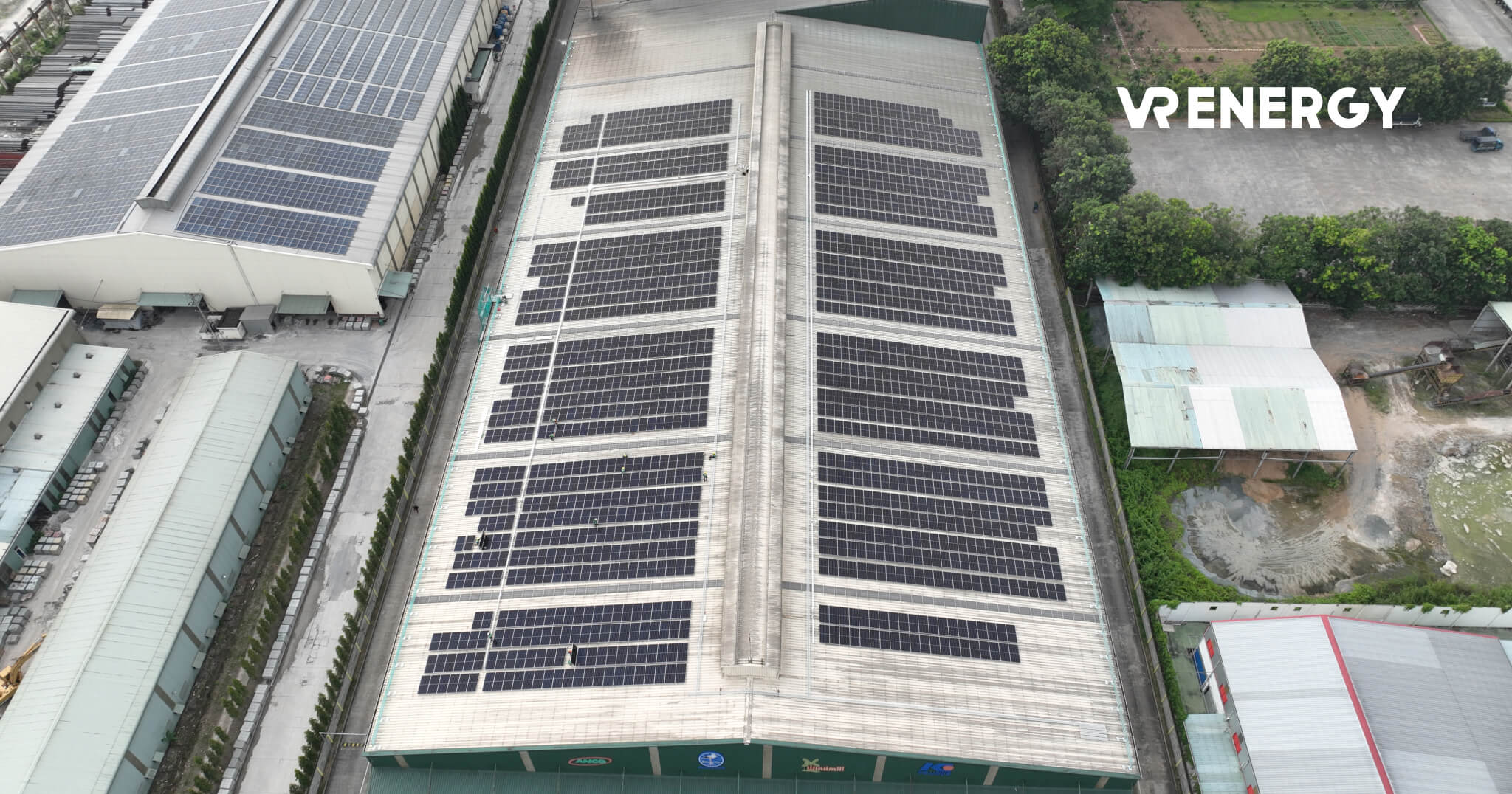
(Example: rooftop solar for a small factory)
4.1. The factory owner’s problem
Small factories, cold storage warehouses, and high-tech agriculture farms often have:
-
Existing rooftop systems of 50–200 kWp installed earlier
-
Three-phase loads including motors, pumps, compressors, and freezer panels
-
High requirements for power stability to avoid outages that could damage goods
When adding ESS, the goals are:
-
Peak shaving during peak hours
-
Backup for critical production lines
-
Increase rooftop solar self-consumption
4.2. AlphaESS — SMILE-G3-T12 / T15 / T20
This series can be seen as a mini BESS cabinet for C&I:
-
Power ratings: 12 / 15 / 20 kW, three-phase
-
Flexible battery capacity from ~7 kWh to over 100 kWh depending on the number of modules
-
Allows DC PV input from 24–40 kWp, suitable to sit behind a larger rooftop PV system
-
Supports peak shaving, time-of-use, UPS, and integration with the factory energy management system
If capacity needs to be upgraded, you simply add battery modules—without replacing the inverter or the platform.
4.3. Comparison with commonly used domestic configurations
In this segment, contractors often:
-
Install Deye 12–20 kW three-phase hybrid + domestic LV battery banks
-
Use GoodWe ET 15–20 kW + HV batteries
-
Use Huawei 20 kW + a separate ESS solution
1) Integration and scalability
-
AlphaESS: battery and inverter from the same brand, modular design; easier expansion and maintenance
-
Mix-and-match solutions: flexible pricing and sourcing, but highly dependent on each EPC’s design capability
2) Documentation for FDI investors
This is where AlphaESS stands out:
-
ESS documentation, battery specs, fire safety (PCCC), communication protocols, etc. are standardized within one documentation set
-
Easier to work with safety teams, supervising consultants, banks—something “domestically assembled” combos struggle to deliver consistently
3) Long-term strategy
If a business is aiming for:
-
Chains of warehouses, farms, or factories
-
Or building the image of a “green, safe, international-standard factory”
…then choosing an integrated ESS platform such as SMILE-G3-T12~20 can reduce design, operations, and maintenance costs over the next 5–10 years.
5. Segment 4 — Retrofit: adding batteries to an existing grid-tied system
5.1. Why retrofit is becoming a trend
Earlier rooftop waves were mostly pure grid-tied systems without batteries. After a few years of operation, many owners realized:
-
Excess power during the day, but still buying electricity at night
-
Every outage shuts down the whole factory/restaurant
-
Tiered tariffs and peak-hour pricing are increasingly painful
However, removing an old inverter to replace it with a hybrid isn’t always feasible: warranty coverage, depreciation, contracts, and other constraints.
5.2. AlphaESS — SMILE-B3 & SMILE-B3-PLUS
These two models solve exactly that problem:
SMILE-B3
-
3 kW AC-coupled output
-
Battery capacity: 2.9–17.2 kWh
-
Installed in parallel with the existing grid-tied inverter, automatically charging/discharging to optimize self-consumption
SMILE-B3-PLUS
-
Still 3 kW AC-coupled
-
Battery capacity: 5.04–30.24 kWh, suitable for homes, villas, and offices with existing 5–10 kWp systems
Advantages:
-
No need to touch the old inverter → no impact on warranty
-
Wiring diagrams, configuration, monitoring—everything is pre-designed for retrofit
-
Easy to replicate across chains of stores or small factories
5.3. Comparison with “DIY” retrofit solutions on the market
Some EPCs implement retrofit by:
-
Adding an off-grid/hybrid inverter of 3–5 kW
-
Building a self-assembled 48 V battery bank
-
Wiring AC-coupled based on their own experience
This can be cheaper, but:
-
Each installer draws a different diagram—hard to standardize
-
When scaling to many sites, consistency becomes extremely difficult to control
-
Fire safety (PCCC) documentation and technical materials are often not strong enough for demanding partners
In contrast, B3/B3-PLUS helps EPCs offer an “international-brand retrofit package” for customers who need quality and stability.
6. AlphaESS in the C&I & Utility segment — opportunities and challenges
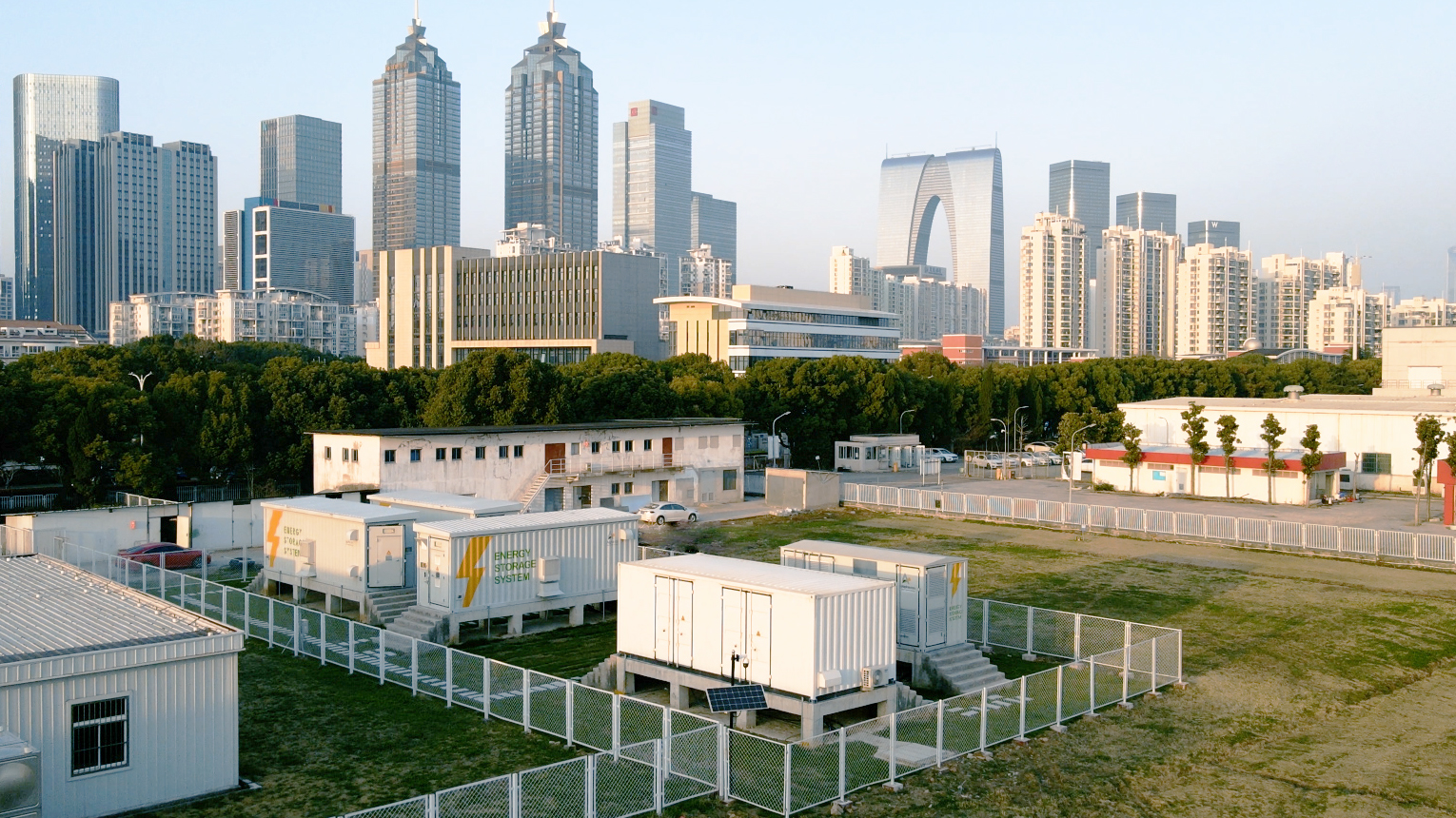
(Industrial & commercial battery storage system AlphaESS, C&I energy storage solutions)
As mentioned earlier, AlphaESS has a fairly complete range of C&I & utility products:
-
StaX-M30/M50, STORION-H30/H50-G3, STORION-G2-H50 — 30–50 kW ESS cabinets for warehouses, mid-sized factories, resorts, farms
-
STORION-TB125 — liquid-cooled 125 kW / ~261 kWh, expandable by adding modules
-
ASTER-5000 — container ESS around 5 MWh for microgrids, grid regulation, large farms, charging stations, etc.
However, in Vietnam, this segment still faces several real-world barriers:
-
The legal framework and pricing mechanisms for ESS are still new and not as clear as grid-tied rooftop solar
-
Interconnection procedures and EVN approvals require more time and implementation experience
-
Upfront CAPEX for C&I & utility systems is relatively large, requiring long-term vision and a clear financial plan
Therefore, when consulting, EPC contractors should:
-
Be honest about benefits, costs, and risks
-
Propose smaller steps first (e.g., 30–50 kW C&I) before moving toward MWh-scale containers
-
Leverage AlphaESS’s advantage as a brand with real experience delivering similar C&I projects across multiple countries
7. When should you choose AlphaESS, and when should you choose other solutions?
To keep the article objective and build trust, both sides should be clearly stated.
7.1. Cases where AlphaESS should be prioritized
Projects involving FDI customers, multinational groups, industrial parks
They prioritize integrated solutions, clear accountability, and strong documentation.
A brand like AlphaESS can speed up internal review and approval processes.
Standardized multi-site projects
Chains of warehouses, stores, farms, villa clusters, etc.
Using the same ESS platform makes design, operations, maintenance, and team training much easier.
Customers prioritizing safety and image
High-end villas, homestays, and premium offices often care more about aesthetics, noise, and fire safety (PCCC) than saving a few tens of millions upfront.
Projects with future expansion plans
SMILE-G3, StaX, and H-series lines allow battery capacity upgrades without replacing the “core framework.”
This suits fast-growing businesses that want to invest step-by-step.
7.2. When other solutions can still be reasonable
On the other hand, there are scenarios where:
-
The number one goal is minimizing upfront investment cost
-
The owner accepts a mix-and-match configuration (“inverter A + battery B”), as long as the EPC designs and installs correctly
…then using Deye, GoodWe, Huawei paired with domestic batteries is not wrong at all—provided that you:
-
Clearly disclose the configuration and separate warranty responsibilities
-
Design correctly and ensure operational safety
-
Have a maintenance and backup plan to avoid reliance on a single “too-exclusive” supply source
The key point: the EPC must fully understand what they are choosing, why they are choosing it, and explain it honestly to the customer.
8. FAQs about AlphaESS storage systems
8.1. Which country is AlphaESS from? Is it reputable?
AlphaESS is an international brand specializing in battery energy storage, headquartered in China, with more than 150,000 systems deployed across over 100 countries. The brand’s strengths include:
-
A dedicated focus on ESS, without spreading too thin across too many unrelated product categories
-
An ecosystem spanning residential to C&I and utility, making it easier for customers to standardize designs
-
Standardized technical documentation and safety certifications, including fire safety (PCCC), aligned with international standards
Therefore, for FDI customers or projects requiring structured documentation, AlphaESS is a name worth putting on the shortlist.
8.2. For a 5 kW home system, how many kWh of AlphaESS batteries should I choose?
The answer depends on usage habits and household goals, but here is a quick reference:
-
Primarily reducing the electricity bill, minimal backup needs → 7–10 kWh is reasonable
-
Want basic backup during outages (lights, fans, fridge, a few small AC units) → 10–15 kWh
-
Villas/homestays with many AC units and comfort loads → 15–20 kWh (or more if budget allows)
A key advantage of AlphaESS is that you can start with a moderate capacity and upgrade later by adding battery modules.
8.3. If I already have a grid-tied system, do I have to replace the inverter to use AlphaESS?
Not necessarily.
-
If you want to switch fully to an integrated ESS solution, you can choose SMILE-M5 or SMILE-G3 (hybrid).
-
If you want to keep the existing grid-tied inverter, you can simply add SMILE-B3 or SMILE-B3-PLUS in an AC-coupled configuration. The old system continues operating normally; AlphaESS acts as a “smart battery tank” added behind the system.
Which option makes sense depends on:
-
Remaining warranty period of the existing inverter
-
Current backup needs and budget
8.4. Compared with locally assembled batteries, what is different about AlphaESS batteries?
From an overall perspective, AlphaESS differs in three main ways:
-
Integration: the batteries are designed specifically for the brand’s inverter, BMS, and EMS → stable communication, fewer minor issues
-
Documentation & certifications: complete datasheets, safety certifications, and fire safety (PCCC) documentation—beneficial for FDI documentation and banks
-
Warranty responsibility: one brand takes end-to-end responsibility, reducing “everyone is right” disputes when issues occur
Meanwhile, locally assembled batteries often have a cost advantage and suit price-sensitive projects, but quality and after-sales service depend heavily on each supplier.
8.5. What is the lifespan and warranty of AlphaESS batteries?
Depending on product line and market, most AlphaESS systems:
-
Use LFP cells, with a design life of around 8,000–10,000 cycles (roughly 10–15 years under normal use)
-
Offer warranties commonly up to 10 years for batteries and inverters, under recommended operating conditions
Batteries do not “suddenly die” after 10 years; capacity gradually declines with cycles. A 10-year warranty typically means the battery must still maintain a minimum capacity threshold after that period, as committed by the manufacturer.
8.6. Is AlphaESS suitable for green loans and ESG programs?
Yes—if the project is properly designed and implemented:
-
ESS increases renewable self-consumption and reduces indirect emissions from the grid
-
Many green funds and banks favor rooftop + ESS projects with clear documentation and internationally recognized brands—AlphaESS fits well in that shortlist
When combined with a structured solar EPC delivery, AlphaESS can become a “plus point” in ESG documentation and corporate sustainability reporting.


 Xem thêm







