


Updated: June 2025 | Information based on latest industry research and standards
Choosing the right solar panel type can determine your investment efficiency for the next 20-25 years. With strong development in solar panel technology and government support policies, understanding each panel type to make the right decision has become more important than ever.
This article will provide detailed analysis of the 5 most popular solar panel types today, compare advantages and disadvantages of each type, and provide specific guidance to help you choose the most suitable panel type for your needs and budget.
Important note: Information in this article is for reference purposes. For the most accurate investment decisions, you should consult experienced solar energy advisors from VRenergy.
Solar Panels 2025: Why Choosing the Right Panel Type Determines Investment Efficiency
3 Important Factors Determining Solar Panel Quality
Conversion efficiency: This is the panel’s ability to convert sunlight into electrical energy, usually measured as a percentage (%). High-efficiency panels will produce more electricity on the same area, especially important when installation space is limited.
Lifespan and durability: Good quality solar panels can operate efficiently for decades. Choosing highly durable panels ensures long-term investment and reduces maintenance costs.
Economic efficiency: Payback period depends on initial purchase price, panel efficiency, and current energy policies. Economically efficient panels will provide long-term benefits.
Why 2025 Is a Favorable Time to Invest in Solar Panels
Solar panel production costs have decreased significantly compared to previous years, making investment more feasible for many households and businesses. Simultaneously, government support policies create clear legal frameworks for rooftop solar development.
New panel technologies like TOPCon and HJT are being commercialized, delivering higher efficiency at reasonable costs. This creates good opportunities for those wanting to invest in advanced technology.
Detailed Analysis of 5 Leading Solar Panel Types 2025
1. Monocrystalline (Mono) Panels – High Efficiency Choice
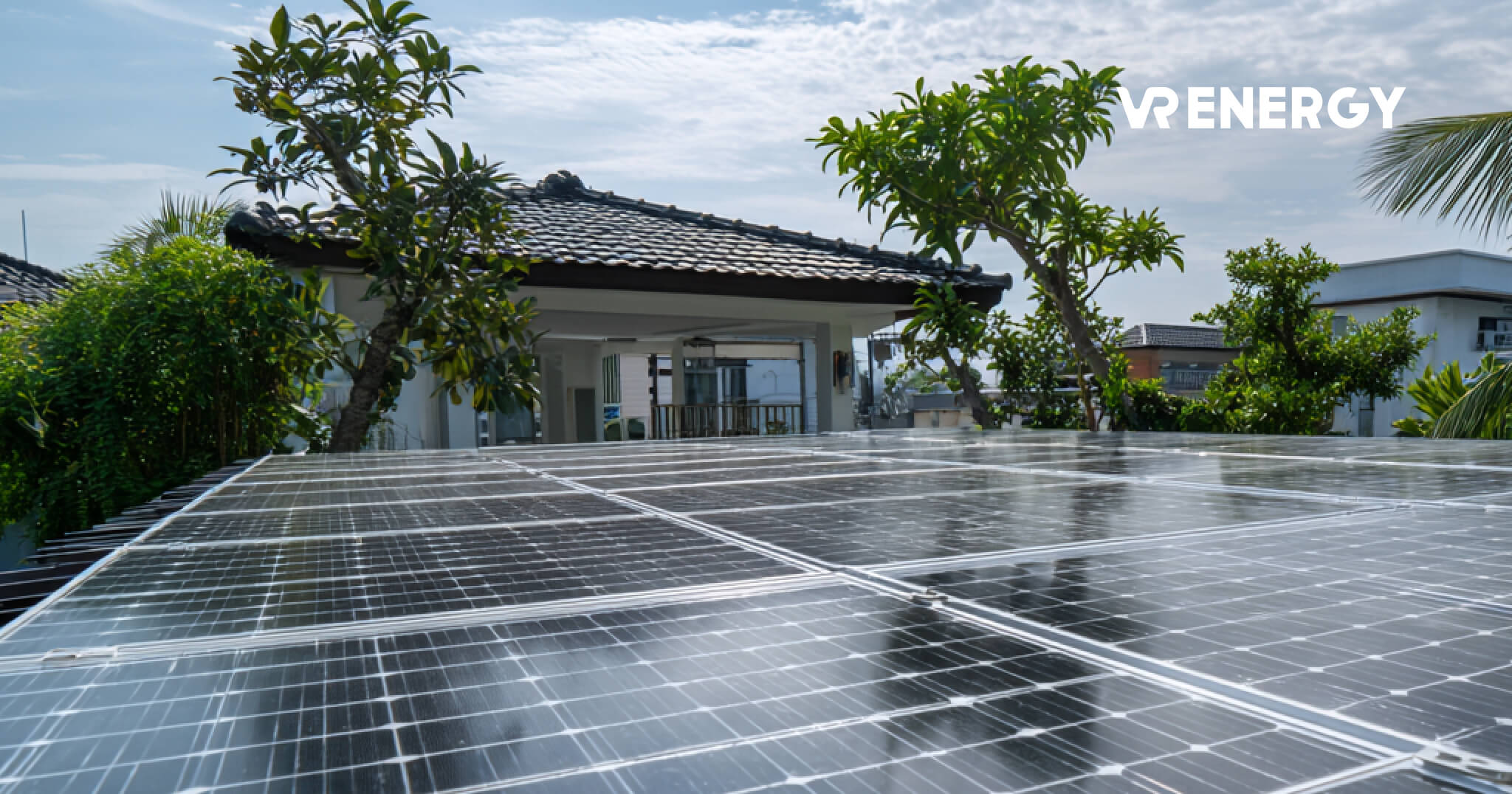
Superior advantages: Mono panels are made from high-purity single-crystal silicon, delivering 15-22% conversion efficiency – the highest among current commercial panels. Leading brands like Longi Solar and Canadian Solar have developed Mono panels with advanced technology.
Mono panels work well in low-light conditions, suitable for Vietnam’s climate with many cloudy days. Mono panel lifespan is typically long, with performance warranties usually up to 25 years and can operate efficiently for over 40 years.
Disadvantages to know: Initial investment cost of Mono panels is higher than other panel types. Efficiency may decrease about 0.3-0.5% for each degree C increase above the standard temperature of 25°C, an issue to note in tropical climate conditions.
Suitable for whom: Mono panels are ideal for households with limited roof area but want to maximize electricity production. Suitable for those with high initial investment capability who want long-term solutions.
2. Polycrystalline (Poly) Panels – Market Status 2025
Important update: According to data from the US National Renewable Energy Laboratory (NREL), Polycrystalline panels currently account for 0% of global production in 2024-2025 as they have been completely replaced by Monocrystalline technology.
Historical information: Poly panels once had lower costs than Mono panels, with 13-16% efficiency. Poly panel production process was relatively simple and had less environmental impact.
Current status: Global manufacturers have switched to Mono panel production due to better overall economic efficiency. Poly panels are now only available in secondary markets or inventory.
Recommendation: For new projects, should prioritize Monocrystalline panels instead of seeking Polycrystalline panels.
3. Thin-Film Panels – Flexible Solution for Special Applications
Unique technology: Thin-Film panels are manufactured by depositing thin layers of photovoltaic materials onto substrates. Main technologies include CdTe (Cadmium Telluride), CIGS (Copper Indium Gallium Selenide), and a-Si (Amorphous Silicon).
Notable advantages:
- Efficiency: 10-20% (lower than crystal panels but continuously improving)
- Flexibility and lightweight
- More stable operation in high-temperature conditions
- Less affected by partial shading
Practical applications: Thin-Film panels are applied in BIPV (Building-Integrated Photovoltaics) projects, mobile devices, and applications requiring high flexibility.
4. Bifacial Panels – Dual-Sided Energy Collection Technology
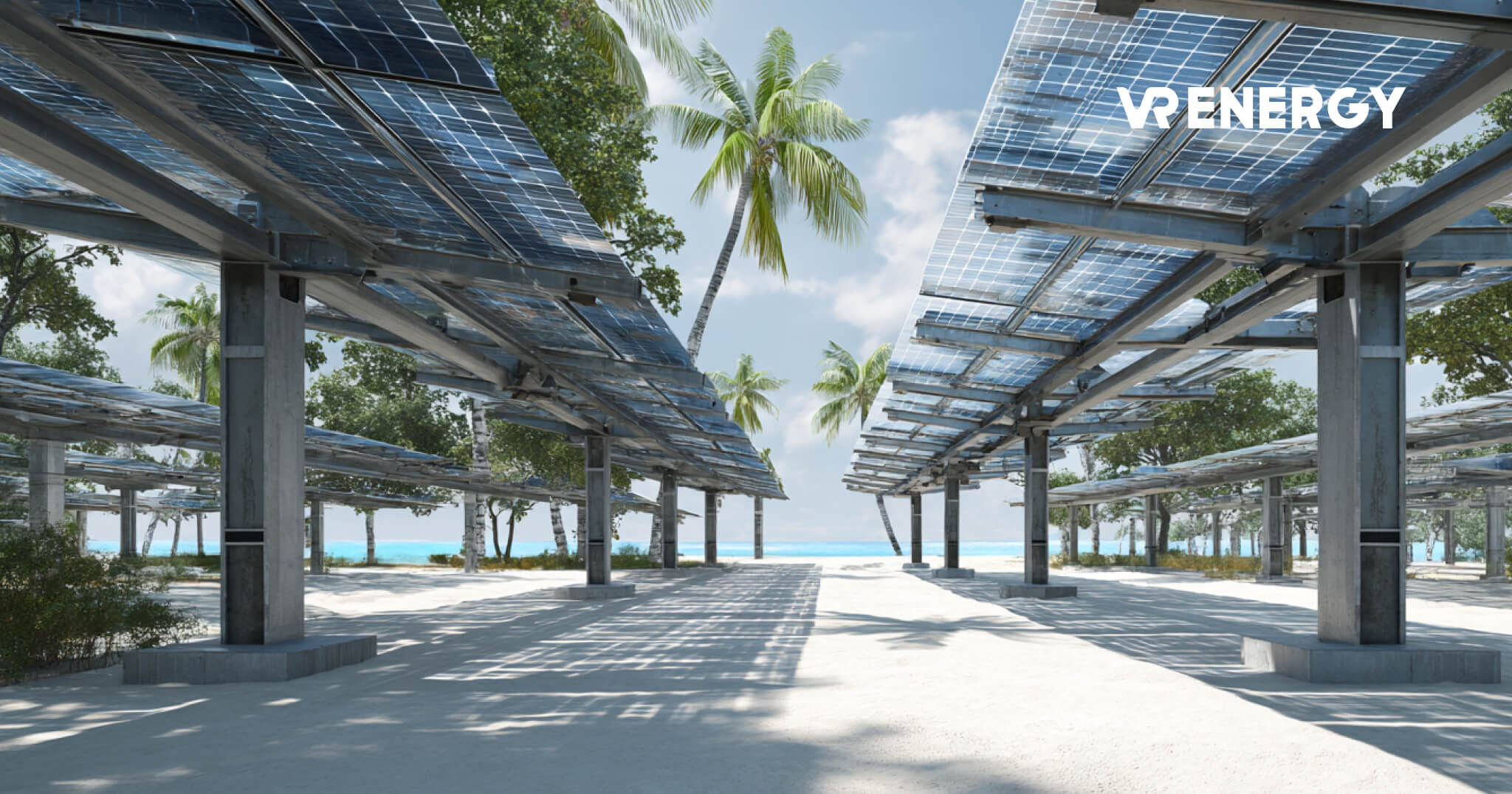
Operating mechanism: Bifacial panels can collect light from both sides, including direct sunlight and reflected light from the ground or surrounding surfaces.
Performance advantages: According to international research, Bifacial panels can increase electricity production by 5-30% compared to traditional panels, depending on installation conditions and surrounding environment’s reflectivity.
Installation conditions: To maximize efficiency, Bifacial panels need:
- Installation on surfaces with good reflectivity (white sand, concrete, light-colored metal roofs)
- Appropriate distance between panels and reflective surface
- Mounting systems allowing light to reach the rear side
5. Perovskite Panels – Future Potential Technology
Research potential: Perovskite panels are being intensively researched with potential to achieve over 30% efficiency when combined with silicon (tandem cells). In laboratories, some cells have achieved up to 47% efficiency.
Current challenges:
- Still in R&D phase, not yet widely commercialized
- Durability and stability issues are being researched and resolved
- Expected to take several more years for stable commercial products
Comprehensive Comparison Table of 5 Solar Panel Types 2025
| Panel Type | Efficiency | Notable Features | Durability | Main Applications | Market Status |
| Mono | 20-22% | High efficiency, good low-light performance | Very high (25+ years) | Households, commercial projects | Market leader |
| Poly | 13-16% | Reasonable cost | High | Solar farms, factories | Production discontinued (2025) |
| Thin-Film | 10-20% | Flexible, lightweight, good heat resistance | Medium | BIPV, special applications | Suitable for special applications |
| Bifacial | 20-22% + 5-30% | Dual-sided energy collection | Very high | Large-scale projects | Strong growth |
| Perovskite | Potential 30%+ | New technology, low cost | In development | Research | R&D, not yet commercial |
Selection Matrix by 2025 Needs
Households with Small Roofs
Recommendation: Mono panels
- Maximize electricity production on limited area
- Higher initial investment but long-term efficiency
Large-Scale Commercial Projects
Recommendation: Mono or Bifacial panels
- Mono panels: Stable, proven solution
- Bifacial panels: Higher efficiency if installation conditions are suitable
Special Applications
Recommendation: Thin-Film panels
- BIPV projects, mobile devices
- Places requiring high flexibility
Solar Panel Technology Trends 2025-2030
Tandem Cell Technology
Tandem Cell technology combining Perovskite with Silicon is being researched to achieve over 30% efficiency. Japan invested $1.5 billion in 2025 to commercialize this technology.
Smart Panel Systems
Trend of integrating AI and IoT into solar panel systems to automatically optimize performance, monitor weather, and predict maintenance.
Transparent Panels – Future of Green Architecture
Transparent panel technology with 1-10% efficiency is being developed for window and building facade applications.
Answering Important Questions About Solar Panels
Are Mono Panels Really Better Than Poly?
According to 2025 industry data, Mono panels have 31% higher efficiency than Poly panels (21% vs 14.5%). With Poly panel production discontinued, Mono panels have become the market standard.
Why Are Bifacial Panels More Expensive?
Bifacial panels have more complex technology and require special installation systems. However, the ability to increase electricity production by 5-30% makes ROI still attractive under suitable conditions.
Which Panel Type Suits Vietnam’s Climate?
Vietnam’s humid tropical climate with high temperatures suits:
- Mono panels: Good performance in low-light conditions, low efficiency decrease when temperature rises
- Thin-Film panels: Less affected by high temperatures
- Bifacial panels: Effective in areas with high reflectivity
When Can Perovskite Panels Be Used Commercially?
According to industry experts, commercial Perovskite panels may appear in 3-5 years. Durability and stability challenges are being actively addressed.
How to Know If Solar Panels Are Good Quality?
Quality panel selection checklist:
- International certifications: IEC 61215, IEC 61730, CE marking
- Warranty: 12-25 year product, 25-year performance
- Reputable brand: Tier 1 according to Bloomberg NEF
- Clear and verifiable technical specifications
- After-sales service in Vietnam
Guide to Choosing Solar Panels Suitable for Your Needs

How to Determine Required Panel Capacity
Estimation formula:
Required capacity (kW) = (Monthly energy consumption × 12) ÷ (Annual sunshine hours × System efficiency factor)
Factors to calculate:
- Monthly energy consumption (kWh)
- Average sunshine hours: North (1,200-1,400h/year), Central (1,400-1,600h/year), South (1,500-1,700h/year)
- System efficiency factor: 0.75-0.85
- Safety factor: 1.1-1.2
Reliable Solar Panel Brands in Vietnam 2025
Tier 1 brands (according to Bloomberg NEF):
- Longi Solar: Market leader, HPBC technology
- JinKo Solar: Tiger Neo series, high efficiency
- Canadian Solar: BiKu bifacial panels
- JA Solar: DeepBlue 4.0 series
- Trina Solar: Vertex series
Supplier selection factors:
- Warranty network in Vietnam
- Installation experience in tropical climate conditions
- Certifications and local regulation compliance
- Financial support and insurance
Conclusion and Recommendations
Choosing the right solar panel type in 2025 requires careful consideration of multiple factors: efficiency, cost, installation conditions, and usage objectives.
Recommendations by target group:
- Mono panels: Optimal choice for households and small commercial projects
- Bifacial panels: Suitable for large projects with favorable installation conditions
- Thin-Film panels: Ideal for special applications and BIPV
- Perovskite panels: Future trend worth monitoring
Final advice: To make the most accurate investment decision, you should:
- Consult at least 3 experienced advisors
- Request detailed quotes and ROI analysis
- Check supplier’s completed project portfolio
- Ensure clear warranty contracts


 Xem thêm








