


Even if you’re just starting to explore solar system maintenance, the term ‘Solar System Maintenance Survey’ might not be too unfamiliar. And you know that this is an important part of maintaining any solar system.
Thus, conducting an effective Solar System Maintenance Survey is your responsibility. However, to achieve this goal, you need to have knowledge from basic to advanced in the implementation steps.
This guide will help you answer accurately three important questions:
- What is a Solar System Maintenance Survey? Why is it important in the process of maintaining the system?
- What methods and types of maintenance surveys are there for solar systems?
- How to develop an effective solar system maintenance survey plan?
However, first, let’s together understand an overview of the importance of conducting a maintenance survey in the field of solar energy.
Solar System Maintenance Survey: Why is it necessary?
The Solar System Maintenance Survey is an important activity to ensure the performance and lifespan of the system. This activity includes checking and comprehensively evaluating the system to detect early errors and potential problems, thereby taking timely remedial measures.
Ensuring performance and lifespan of the system

Solar panels are the most important component of the solar system. During operation, these panels can be dirty, mossy, or affected by environmental factors such as rain and sun, reducing electricity generation efficiency. Additionally, other devices in the system such as inverters, controllers… may also face technical problems.
Regular maintenance surveys help detect and fix these issues, making the system more efficient and extending its lifespan.
Early detection of errors and potential problems
Errors and potential problems in the solar system can have serious consequences, such as:
- Reducing electricity generation efficiency, decreasing the economic benefits of the system.
- Endangering users, such as electric shocks, fires, explosions.
- Damaging devices in the system, leading to high repair and replacement costs.
Regular maintenance surveys help detect errors and potential problems early, taking timely measures to avoid serious consequences.
Performance evaluation of the solar system
Evaluating the performance of the solar system is an important activity to determine how efficiently the system is operating. System performance is measured by the ratio of actual electricity output to theoretical electricity output.
Measuring output power
The output power of the solar system is measured using a power meter. The power meter is connected to the system’s inverter and will display the system’s output power in real-time.
Checking conversion efficiency
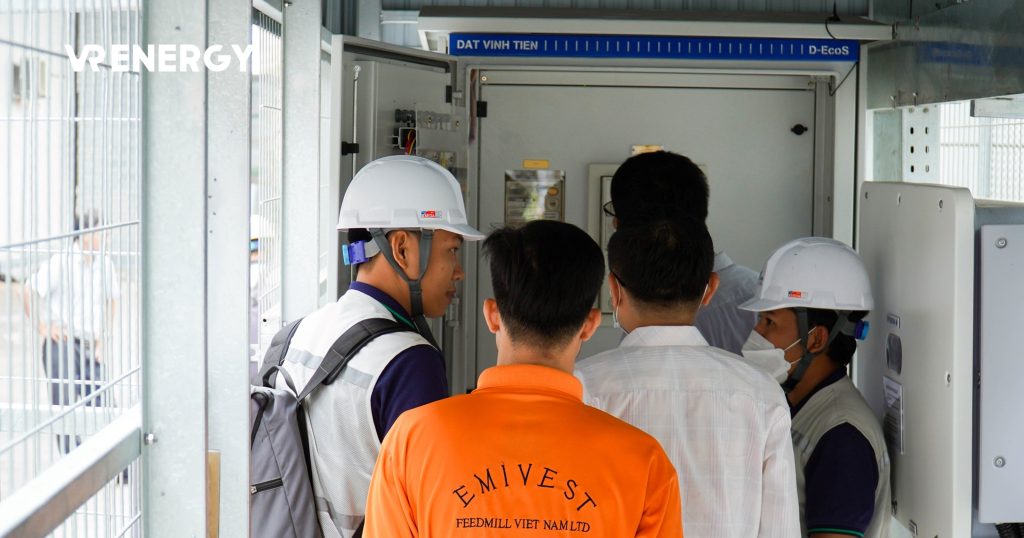
Conversion efficiency is the ratio of the output power of solar panels to the output power of the inverter. Conversion efficiency is measured using a conversion efficiency meter. This meter is connected to the solar panels and the system’s inverter.
Statistical data analysis
Statistical data on the system’s electricity output can be used to evaluate the system’s performance. This data can be collected from the inverter or a power meter.
Statistical data need to be analyzed to identify trends and anomalies. Trends can indicate that the system is operating more or less efficiently over time. Anomalies can indicate that the system has a problem that needs to be addressed.
Performance evaluation results
The results of the performance evaluation of the solar system will help determine how efficiently the system is operating. If the system’s performance is lower than expected, it’s necessary to find the cause and take corrective action.
Early error detection in the system
Early error detection in the solar system is an important activity to ensure the safety and efficiency of the system. Errors in the solar system can have serious consequences, such as:
- Reducing electricity generation efficiency
- Endangering users
- Damaging devices in the system
Early error detection will help fix problems in time, avoiding serious consequences.
Checking the operation of the inverter
The inverter is the most important component in the solar system. The inverter’s job is to convert direct current from solar panels into alternating current for use with electrical devices in the house.
Checking the operation of the inverter includes the following steps:
- Checking whether the inverter is operating normally.
- Checking whether the technical parameters of the inverter are within the allowable range.
- Checking whether the inverter makes noise or any other abnormal signs.
If the inverter is found to have problems, contact the maintenance service provider for support.
Checking the status of the electrical circuit
The electrical circuit is the system of wires and electrical devices connecting solar panels to the inverter.
Checking the status of the electrical circuit includes the following steps:
- Checking whether the wires are exposed, broken, or damaged.
- Checking whether the connections are secure and safe.
- Checking whether any electrical devices are damaged.
If the electrical circuit is found to have problems, contact the maintenance service provider for support.
Checking the performance of solar panels
Solar panels are the most important component in the solar system. Solar panels can be dirty, mossy, or affected by environmental factors such as rain and sun, reducing electricity generation efficiency.
Checking the performance of solar panels includes the following steps:
- Checking whether the surface of the solar panels is dirty, mossy, or affected by other environmental factors.
- Measuring the output power of the solar panels.
If the solar panels are found to have problems, clean the solar panels or replace damaged solar panels.
In addition, solar system users can also use remote monitoring tools to monitor the system’s performance. These remote monitoring tools will provide information about electricity output, equipment performance… helping to detect early errors and problems in the system.
Basic steps in the solar system maintenance process
Below are the basic steps in the solar system maintenance process:
Checking and cleaning the surface of solar panels
The surface of solar panels is where direct contact with sunlight occurs, so it is easily dirty, mossy,… reducing electricity generation efficiency.
To clean the surface of solar panels, use a soft damp cloth or gently sweep with a brush. Do not use strong cleaning agents or sharp objects to avoid scratching the surface of the solar panels.
Checking and cleaning the cable and connection system
The cable and connection system is an important component in the solar system, helping to transmit electricity from solar panels to the inverter.
To check and clean the cable and connection system, check whether the wires are exposed, broken, or damaged. If any problems are detected, replace the damaged wires.
Additionally, check whether the connections are secure and safe. If loose connections are detected, tighten the connections.
Checking and maintaining the inverter
The inverter is the most important component in the solar system. The inverter’s job is to convert direct current from solar panels into alternating current for use with electrical devices in the house.
To check and maintain the inverter, check whether the inverter is operating normally. If the inverter is found to have problems, contact the maintenance service provider for support.
In addition, during the solar system maintenance process, check and replace damaged, worn components. At the same time, monitor the technical parameters of the system to detect early errors and problems.
Regular solar system maintenance will help ensure the system operates efficiently and extends its lifespan.
Handling common errors in the solar system
Loss of grid connection
Loss of grid connection is a common error in the solar system. This error can be caused by many reasons, such as:
- Disconnection due to maintenance or repair.
- Damage or loose connections.
- Electrical equipment failure.

To handle the loss of grid connection error, determine the cause of the error. If the error is due to disconnection due to maintenance or repair, reconnect the devices. If the error is due to damage or loose connections, tighten the connections or replace damaged wires. If the error is due to electrical equipment failure, contact the maintenance service provider for support.
Damaged or broken solar panels
Damaged or broken solar panels are a serious error that can reduce efficiency or even stop the operation of the solar system. This error can be caused by many reasons, such as:
- Environmental impact, such as storms, lightning…
- Manufacturing errors.
- Improper use and maintenance.
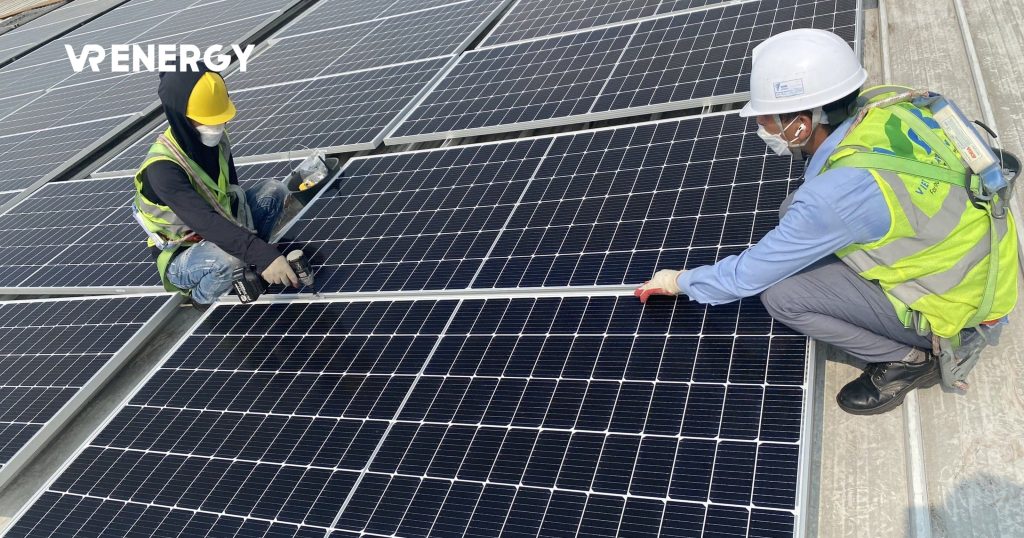
To handle the error of damaged or broken solar panels, determine the cause of the error. If the error is due to environmental impact, check and repair mechanical damage. If the error is due to manufacturing errors, contact the manufacturer for support. If the error is due to improper use and maintenance, replace the damaged solar panels.
Problems with the inverter
Problems with the inverter are a serious error that can stop the operation of the solar system. This error can be caused by many reasons, such as:
- Disconnection due to maintenance or repair.
- Damage or loose connections.
- Electrical equipment failure.
To handle the error of problems with the inverter, determine the cause of the error. If the error is due to disconnection due to maintenance or repair, reconnect the devices. If the error is due to damage or loose connections, tighten the connections or replace damaged wires. If the error is due to electrical equipment failure, contact the maintenance service provider for support.
Regular solar system maintenance will help detect early errors and problems, taking timely measures to avoid serious consequences.
Time and frequency of solar system maintenance surveys
Initial survey time
The initial survey time is the necessary time to check and comprehensively evaluate the solar system before putting it into operation. The initial survey includes the following steps:
- Checking the installation location of the system.
- Checking the technical parameters of the system.
- Checking the equipment in the system.
- Checking the performance of the system.
The initial survey time is usually 1-2 days.
Regular maintenance frequency
The frequency of regular maintenance depends on many factors, such as:
- Environmental conditions of the system installation.
- Types of equipment used in the system.
- The level of system usage.
Typically, manufacturers recommend conducting regular maintenance every 6 months for rooftop solar systems and every 3 months for rooftop solar systems.

Các công việc bảo trì định kỳ bao gồm:
- Checking and cleaning the surface of solar panels.
- Checking and cleaning the cable and connection system.
- Checking and maintaining the inverter.
Special maintenance survey
A special maintenance survey is a maintenance activity carried out when the solar system encounters problems such as:
- Damage due to natural disasters, storms…
- Damage due to improper use and maintenance.
- Sudden decrease in system performance.
The special maintenance survey will be conducted at the request of the system owner or as directed by the maintenance service
In conclusion, regular maintenance of solar power systems is crucial to ensure their efficient operation and longevity.
Kết luận
It can be said that the field of solar power system maintenance is continuously evolving, requiring experts in the industry to constantly update their knowledge and techniques.
In this article on solar power system maintenance survey, I will provide you with a basic and detailed understanding of the process of evaluating performance as well as early error detection in your system. You can also find more detailed information through related articles.
If you have further questions or need detailed advice, please refer to the solar power system maintenance survey services at VREnergy. We will provide you with all the information and detailed quotes!


 Xem thêm








