


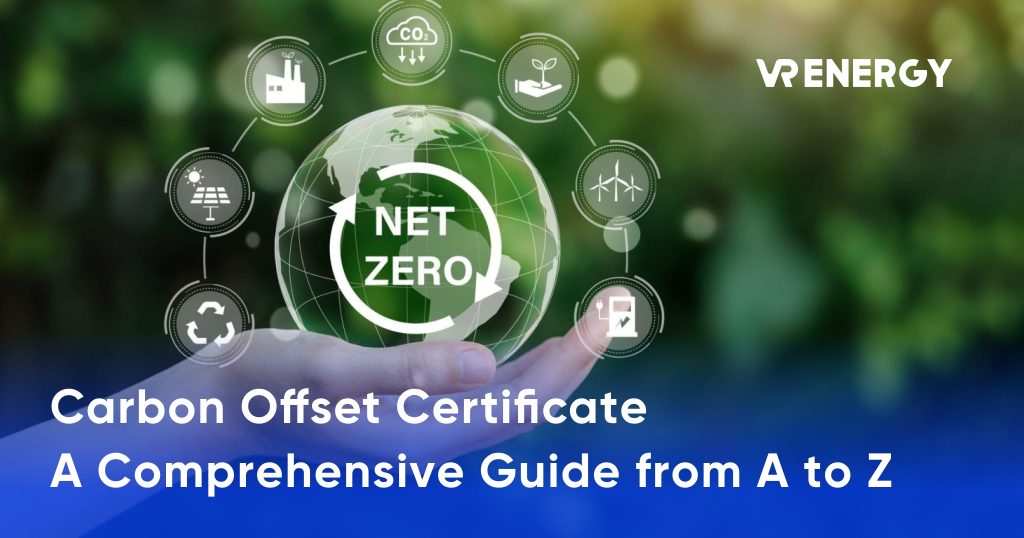
Are you looking for a solution for your Net Zero journey ? Carbon offset certificates are an effective tool to help you offset carbon emissions, contributing to environmental protection and achieving sustainable development goals.
However, starting this journey can be confusing with the overwhelming amount of information and jargon. This article will be a comprehensive A to Z guide to Carbon Offset Certificates , helping you:
- What is a carbon offset certificate:
- Benefits of using carbon offset certificates
- Types of carbon offset certificates
- How to choose and buy carbon offset certificates
- Update the latest trends in the carbon offset certificate market
Let’s start your carbon offsetting journey towards the community’s shared Net Zero goal today!
What is a carbon offset certificate?
Carbon offset certificate is a tool used to offset human-generated greenhouse gas (GHG) emissions. Specifically, it represents a reduction of one ton of CO2 emissions or other greenhouse gases from the atmosphere. When an individual or organization purchases a carbon offset certificate , they are investing in a project that helps reduce GHG emissions, for example:
- Planting forests: Trees absorb CO2 from the atmosphere, helping to reduce greenhouse gas emissions.
- Renewable energy : Renewable energy projects such as wind power and solar power help replace traditional energy sources using fossil fuels, thereby reducing CO2 emissions.
- Improve energy efficiency: Projects that improve energy efficiency help reduce CO2 emissions from production and consumption activities.

How it works:
- Measure emissions: The first step is to determine the amount of GHG emissions you or your organization produces. This can be done using emissions calculation tools or hiring a professional consultant.
- Choose carbon offset projects : After knowing the amount of emissions that need to be offset, you can choose a suitable project to invest in. There are many different carbon offset projects in the world, you should choose a reputable project with certification from international organizations such as Verra and Gold Standard.
- Buy carbon offset certificates: Once you have selected a project, you can purchase carbon offset certificates from the organization managing the project. Each certificate – carbon credit corresponds to one ton of offset CO2 emissions.
Benefits of using carbon offset certificates
From practical value, carbon offset certificates are increasingly widely used by individuals, organizations and businesses because of the practical benefits it brings. Here are some key benefits:
Achieve net zero emissions target (Net Zero)
Using this certificate helps balance emissions, aiming for net zero emissions – a common goal of the international community in combating climate change.
Enhance image and reputation
Using carbon offset certificates demonstrates a business’s commitment to the environment and social responsibility. This contributes to enhancing the image and reputation of the business in the community, attracting potential customers and partners, and creating a competitive advantage in the market.
Contribute to protect the environment
By offsetting GHG emissions, carbon offset certificates contribute to environmental protection, minimizing the negative impacts of climate change. This is a practical action to protect the living environment for ourselves and future generations.
Benefit of economic
The use of carbon offset certificates can bring economic benefits to businesses. Some countries and regions have preferential policies for businesses using this certificate , such as tax reduction or financial support.
Inspire the community
Using carbon offset certificates is a way for businesses to inspire the community to join hands in protecting the environment. This contributes to raising awareness about climate change and promoting positive actions to protect the living environment.
So at the present time, what types of carbon offset certificates will we have access to? Please join VREnergy to see more information below.
Types of carbon offset certificates
Currently, there are many different types of certificates, each with its own characteristics and advantages and disadvantages. Here are some common types:
Certificate according to international standards
- Verified Carbon Standard (VCS): This is the most popular standard in the world, applied to many different types of carbon offset projects.
- Gold Standard: This standard focuses on projects that bring community benefits and sustainable development.
- Climate Action Reserve (CAR): This standard is widely used in the United States and Canada.
Certificate according to Vietnamese standards
- CCB Vietnam Certificate: This certificate is issued to carbon offset projects that comply with international standards and are suitable for Vietnamese conditions.
- Vietnam CDM Certificate: This certificate is issued for clean development mechanism (CDM) projects according to Decree 117/2020/ND-CP.
Classify certificates by project type
- Afforestation projects: This type of project is the most popular, helping to absorb CO2 from the atmosphere.
- Renewable energy projects: This type of project helps reduce CO2 emissions by using renewable energy sources such as wind power and solar power.
- Projects to improve energy efficiency: This type of project helps reduce CO2 emissions by improving energy efficiency in production and consumption activities.
However, information about the carbon offset industry is still limited, so when choosing and purchasing a certificate, we need to consult many places. Specifically, below is the way that VREnergy suggests to you:
How to choose and buy carbon offset certificates
Choosing and purchasing the right certification plays an important role in ensuring the efficiency and transparency of the carbon offset process. Below are detailed instructions:
Step 1: Determine carbon offset needs:
- Calculate GHG emissions: Use online calculators or hire a professional consultant to determine the amount of GHG emissions you or your organization produces.
- Identify offset goals: Clearly define your carbon offset goals, for example achieving net zero emissions or supporting sustainable development projects.
Step 2: Choose certificate type:
- Certification standards: Choose a certificate type that matches international standards (such as VCS, Gold Standard) or Vietnamese standards (such as CCB Vietnam, CDM Vietnam).
- Project type: Select the type of carbon offset project that suits your needs and goals, such as afforestation projects, renewable energy projects, or energy efficiency projects.
Step 3: Search for suppliers:
- Search online: Visit the websites of reputable organizations such as Verra, Gold Standard, or Vietnam Clean Development Center to search for certification providers.
- Direct contact : Contact directly with non-governmental organizations (NGOs) or professional climate change consulting companies for advice and support.
Step 4: Evaluate and select suppliers:
- Reputation and experience: Verify the supplier’s reputation and experience in the carbon offset sector.
- Project quality: Evaluate the quality of carbon offset projects, including transparency, emission reduction effectiveness, and community benefits.
- Price: Compare prices from different suppliers to choose the most suitable solution.
Step 5: Buy certificate:
- Sign a contract: Sign a certificate purchase contract with the supplier.
- Payment: Pay the cost of purchasing the certificate according to the agreed method.
Through the content sections about concepts, benefits, classification and how to choose to buy carbon offset certificates, you have certain information.
Let’s learn more about the latest trends in the certificate market to have more direction for your individuals, businesses and organizations.
Update the latest trends in the carbon offset certificate market
The carbon offset certificate market is seeing strong growth in recent years, driven by factors such as:
- There is growing demand from businesses and individuals to reduce greenhouse gas emissions and achieve net zero emissions targets.
- Investors are increasingly interested in carbon offset projects, seeing this as a potential investment channel that brings benefits to the environment.
- The introduction of new technologies helps improve the efficiency and transparency of the carbon offset market.

Here are some of the latest trends in the carbon offset certificate market:
Growing demand:
Demand for carbon offset certificates is expected to grow strongly in the coming years, according to forecasts by reputable organizations such as Verra and World Bank. This demand is driven by Net Zero commitments by many countries, businesses and organizations globally.
Market diversification:
The carbon offset certificate market is increasingly diverse with a variety of project types, from traditional afforestation projects to advanced renewable energy projects. This diversity helps meet the needs and goals of many different customers.
Enhance transparency:
New technologies such as blockchain are being applied to enhance the transparency and efficiency of the carbon offset market. The application of technology helps increase the confidence of investors and customers in this market.
Development trends:
Some potential growth trends of the carbon offset certificate market include:
- There is a growing demand for high-quality carbon offset projects.
- The development of national and regional carbon markets.
- Strengthen international cooperation in the field of carbon offsets.
With this comprehensive guide, you’ll confidently offset your carbon footprint and help protect the environment for future generations.
Don’t forget to share this article with everyone interested in Carbon Offset Certificates and the Net Zero goal!


 Xem thêm








