



Reviewing the State of Clean Energy: Is Vietnam on the Right Track?
The race to develop clean energy is heating up daily, with remarkable progress in many countries, including Vietnam. The question is: are we truly keeping up with global trends, or are we merely following them superficially?
Vietnam: The Journey of Energy Transition and Key Progress
Power Development Plan VIII: A Roadmap for Future Energy Growth
In May 2023, after extensive research and multiple review sessions, Power Development Plan VIII was officially approved by the Prime Minister. This plan sets ambitious targets, including an offshore wind power capacity of 6,000 MW and rooftop solar capacity of 2,600 MW by 2030.
According to many industry experts, while this vision aligns with sustainable development, implementing these targets in reality requires significant effort and coordinated solutions from all stakeholders.
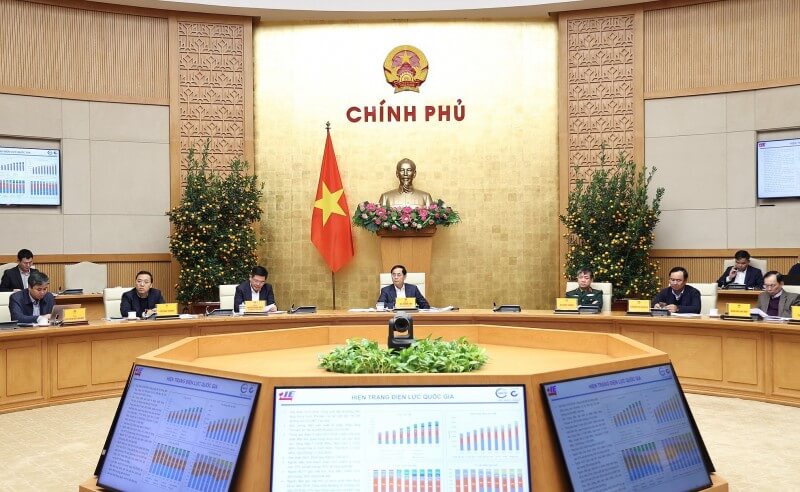
Over the past implementation period, several renewable energy projects have struggled to maintain operational efficiency following the end of the FIT pricing mechanism. This underscores the necessity of long-term, sustainable policies to bridge the gap between planning and practical execution.
Strategic Adjustments: Balancing Energy Sources
Compared to initial targets, Vietnam has increased its solar power share from 5% to 16%—an ambitious figure. However, it is noteworthy that coal power capacity is still planned to rise from 30.1 GW to 31 GW by 2030.
Energy experts believe this adjustment reflects a pragmatic consideration between energy security and the green transition. With Vietnam’s electricity demand growing at 8-10% per year, a complete shift away from coal needs to follow a roadmap aligned with real-world conditions.
Surprisingly, nuclear power has reappeared in the country’s energy plans, with deployment scheduled for 2035—despite being “phased out” in 2016. Is this a sign of inconsistent strategy?
Global Clean Energy Trends: Key Developments
Record Investment in Clean Energy and China’s Dominance
In 2024, global investment in clean energy reached a record $2 trillion, an 11% increase from the previous year. Remarkably, China alone accounted for $818 billion—more than the combined investments of the US, EU, and UK!
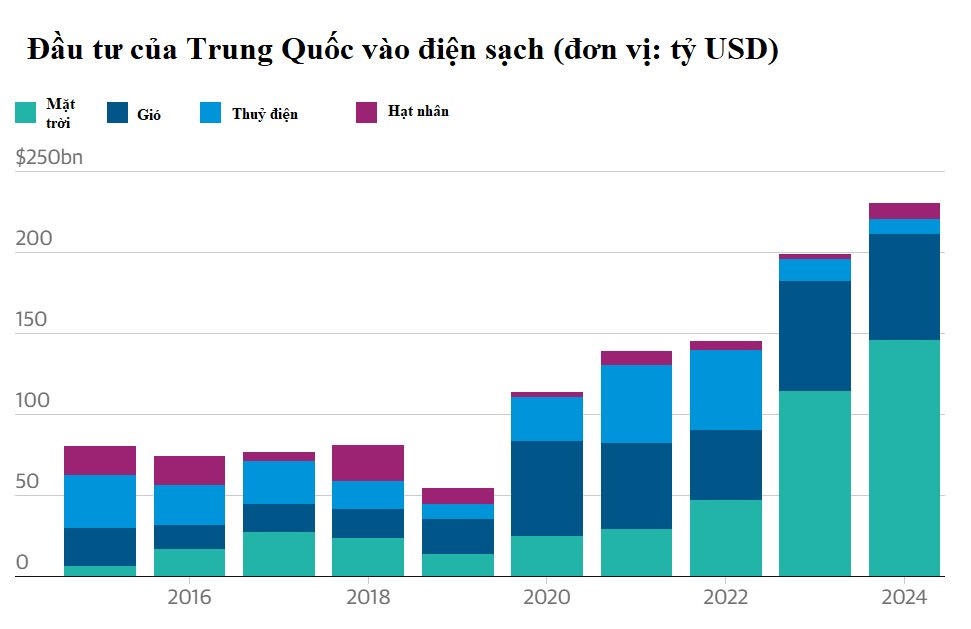
China’s solar panel manufacturing giants, such as LONGi, have achieved staggering production scales, with millions of panels produced monthly. Thanks to economies of scale and technological advancements, solar panel prices have dropped by 90% over the past decade, according to multiple industry reports.
Leading Tech Firms Driving a Green Supply Chain
“Going green” is no longer just a slogan—it has become a real business pressure! Apple, for instance, has mandated that over 200 suppliers must use 100% renewable energy, equivalent to nearly 3,000 gigawatts of clean electricity.
In Vietnam, factories operated by Luxshare and Goertek are racing to install rooftop solar systems to meet this requirement. According to manufacturers in industrial zones in Bac Giang, complying with green standards is now a prerequisite for maintaining contracts with major tech corporations.
Southeast Asia: Investment Needs and Growth Potential
According to the International Energy Agency (IEA), Southeast Asia needs to inject $190 billion into clean energy—five times the current investment levels—to meet climate goals by 2035. This figure is staggering, especially given the region’s economic challenges.
However, opportunities are emerging as major investors like Masdar (UAE) and Iberdrola (Spain) explore large-scale project funding in Vietnam, Indonesia, and the Philippines.
Outlook and Solutions for the Future
Looking back, Vietnam has made significant progress in clean energy development. However, several challenges remain:
- Overloaded Power Grid: In provinces with high renewable energy potential, such as Ninh Thuan and Binh Thuan, grid infrastructure is struggling to accommodate solar power output.
- Lack of a Suitable Pricing Mechanism: Since the end of the FIT policy, the DPPA electricity market has yet to be fully implemented.
- Massive Investment Needs: Vietnam requires approximately $14 billion annually to sustain its energy sector.
In this context, adjusting Power Development Plan VIII is necessary but insufficient. A more comprehensive, long-term, and practical strategy is essential.
Leading energy experts emphasize that energy transition is not solely the responsibility of the power sector—it is a challenge for the entire economy. This is a profound transformation, not just in energy sources but in how we produce, consume, and manage energy.
Perhaps it is time to recognize that clean energy development is not merely a trend but a survival strategy for sustainable growth in the future.


 Xem thêm








