


ESG – an acronym for Environment, Society and Governance – is becoming a key factor in the current sustainable development landscape. Businesses that do not pay attention to ESG will gradually be left behind.
So what is ESG and why is it so important ? This article VREnergy will introduce you to detailed information about ESG, helping you better understand this concept and its importance to businesses, including:
- Detailed definition of ESG and each E, S, G factor.
- History of formation and development of ESG.
- The role and importance of ESG for businesses, society and the economy.
- Popular ESG assessment framework.
- Instructions for applying ESG effectively in businesses.
- Future development trends of ESG.
Let’s explore the world of ESG to better understand the key to the sustainable development of businesses in the future!
What is ESG?
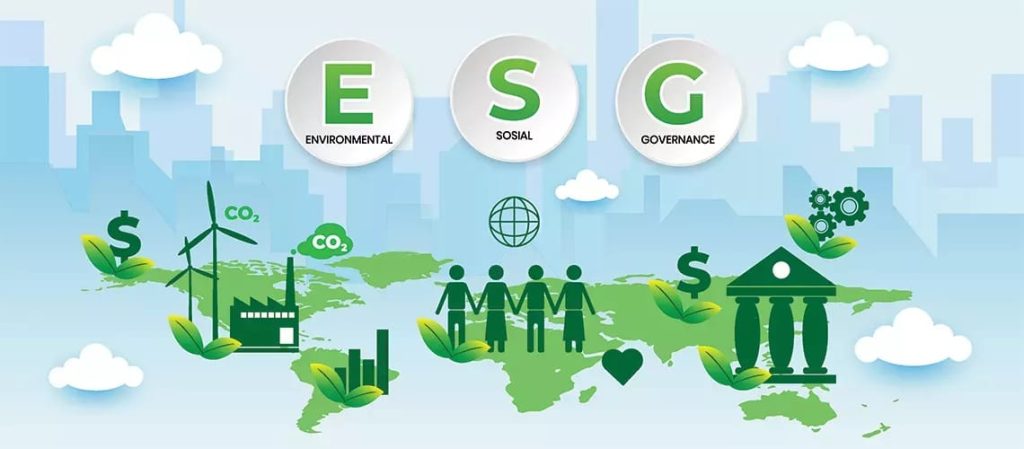
ESG stands for Environment, Society and Governance , and is a set of standards used to evaluate business performance in considering environmental factors. , society and governance into its business activities. The detailed definition of ESG is :
- Environmental: Assess the business’s impact on the environment, including the use of natural resources, environmental pollution, climate change, etc.
- Social: Evaluates a business’s social responsibility to the community, including business ethics, working conditions, employee rights, etc.
- Governance: Evaluates the effectiveness of corporate governance, including information transparency, governance structure, leadership ethics, etc.
3 evaluation criteria in ESG
Criterion 1: Environment (E)
How do business activities affect the environment? Does the enterprise take measures to protect natural resources and minimize negative impacts on the environment?
Criterion 2: Society (S)
What are your business’s policies and practices related to human rights, labor management, and fair treatment of customers, partners, and the community?
Criterion 3: Governance (G)
Does the enterprise’s management system and internal control policies ensure compliance with general regulations, transparency and ethics in business?
ESG-oriented investing and business not only benefits businesses but also contributes to creating a sustainable future for everyone. Businesses need to proactively apply ESG standards to their business operations to enhance reputation, attract investors and create competitive advantage in an increasingly competitive market.
In addition, implementing ESG principles also helps businesses build an image of being responsible to the community, environment and society, thereby enhancing the trust of customers and partners.
Therefore, it can be affirmed that ESG is an inevitable trend in modern investment and business. Businesses need to change their thinking and business strategies to adapt to this trend, aiming for sustainable development and creating common value for all stakeholders.
ESG assessment framework
Popular sets of ESG assessment standards:
Currently, there are many widely used sets of ESG assessment standards, each with its own strengths, weaknesses and differences. Below are some typical sets of standards:
- GRI Standards (Global Reporting Initiative): Is the most widely used set of global standards, providing a detailed reporting system on ESG aspects. Strengths: Comprehensive, widely recognized, suitable for many professions. Weaknesses: Complex, time consuming and costly to apply.
- SASB Standards (Sustainability Accounting Standards Board): Focus on ESG issues that have a financial impact on businesses, suitable for investors. Strengths: Specific instructions for each profession, easy to apply. Weaknesses: Less widely recognized by GRI Standards.
- IIRC Framework (Integrated Reporting Framework): Combines financial reporting with ESG reporting, helping businesses demonstrate long-term value. Strengths: Enhance transparency, helping investors better understand the business. Weaknesses: Difficult to apply to small and medium enterprises.
ESG assessment process:
A business’s ESG assessment process usually includes the following steps:
- Step 1 – Determine the scope of assessment: Select ESG standards appropriate to the industry, scale and goals of the business.
- Step 2 – Collect data: Collect information about the business’s ESG activities from internal and external sources.
- Step 3 – Evaluate performance: Analyze the collected data to evaluate the business’s ESG performance against selected standards.
- Step 4 – Report results: Prepare an ESG report presenting assessment results and recommendations for improvement.
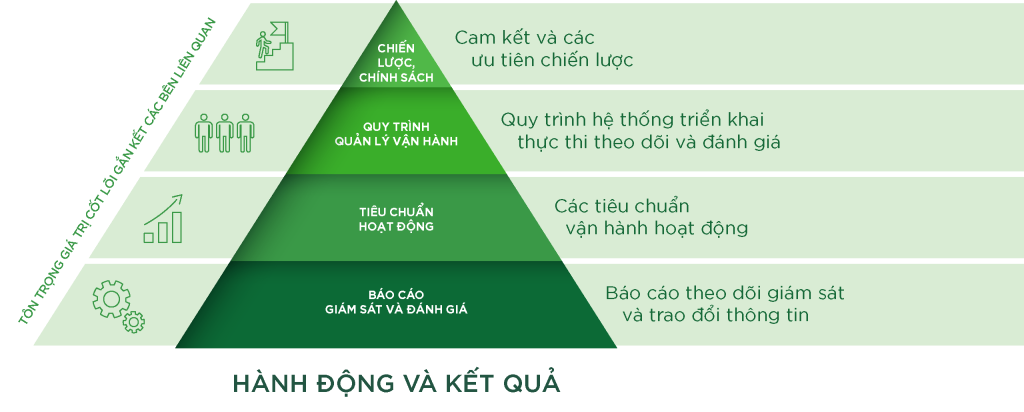
Role of stakeholders in the ESG assessment process:
- Enterprise: Provides data and information necessary for evaluation.
- Rating agency: Performs ESG assessments against selected standards.
- Investors: Use ESG assessment results to make investment decisions.
- Community: Pay attention to the ESG impact of businesses on the environment and society.
- Government: Issue regulations and policies related to ESG.
From the assessment framework, helping businesses identify strengths, weaknesses and risks related to ESG . Thanks to that, businesses can devise appropriate strategies to improve ESG performance and effectively manage risks. An ESG assessment helps businesses identify areas that need improvement and develop specific action plans to enhance ESG performance. From there, businesses can attract the attention of investors, especially socially responsible investors.
In addition, businesses that are transparent and responsible with ESG will build reputation and a good brand image in the eyes of customers and partners.
Applying ESG in businesses
Applying ESG brings great benefits to businesses, helping them develop sustainably and create common value for all stakeholders.
- Improve corporate governance efficiency: Applying ESG helps businesses build a transparent and effective governance system, aiming for sustainable development, thereby improving competitiveness and creating advantages compared to competitors. other competitors.
- Minimize risks and operating costs: Businesses with good ESG performance are often able to manage risks more effectively, thereby minimizing damage caused by environmental, social and governance issues. go out. Effective management of ESG issues also helps businesses save on long-term operating costs.
- Enhanced access to capital and markets: Investors are increasingly interested in ESG factors when making investment decisions. Businesses with good ESG performance will attract the attention of socially responsible investors, thereby opening up opportunities to access new capital and markets.
- Enhance brand image and reputation: Businesses that are transparent and responsible with ESG will build reputation and a good brand image in the eyes of customers, partners and the community. This helps businesses attract customers, increase revenue and profits.
- Attract and retain talent: Employees are increasingly interested in working for ESG responsible companies. Businesses with good ESG performance will attract talent and retain employees effectively.

Challenges in applying ESG:
Applying ESG also has some potential challenges that businesses need to pay attention to:
- Lack of resources and knowledge about ESG: Many businesses, especially small and medium-sized enterprises, lack resources and knowledge about ESG. This makes applying ESG difficult.
- Cost of implementing and maintaining an ESG management system: Implementing and maintaining an ESG management system requires certain financial resources. This may be a barrier for some businesses.
- Change in corporate culture: Applying ESG requires a change in corporate culture, towards sustainable development and social responsibility. This can be difficult to do.
- Pressure from stakeholders: Businesses may face pressure from stakeholders such as investors, customers, communities… in applying ESG.
Solutions to apply ESG effectively:
To apply ESG effectively, businesses need to:
- Commitment from senior leaders: Senior leaders need to commit and demonstrate determination to apply ESG in all business operations.
- Raising employees’ awareness of ESG: Enterprises need to organize training programs to raise employees’ awareness of ESG.
- Building an ESG management system suitable for businesses: Businesses need to build an ESG management system suitable for the industry, scale and characteristics of the business.
- Report and disclose ESG information transparently: Enterprises need to report and disclose ESG information transparently, fully and accurately according to international standards.
- Seek support from stakeholders: Businesses can seek support from stakeholders such as non-profit organizations, consultants, etc. to apply ESG effectively.
Applying ESG is an inevitable trend in modern business. Businesses need to proactively apply ESG to improve governance efficiency, reduce risks, attract investment, enhance brand image and create common value for all stakeholders.
The development trend of ESG
Investors are increasingly aware of the importance of ESG for business performance and sustainable development. Businesses with good ESG performance are often able to manage risk more effectively, thereby delivering higher returns to investors.
More and more investment funds are being established with the goal of investing in businesses with good ESG performance. These funds attract large amounts of capital from individual and institutional investors, contributing to promoting the development of ESG.
This trend is expected to continue to grow in the future, with more and more investors paying attention to ESG factors when making investment decisions.
In addition, countries around the world are increasingly promulgating laws and regulations on ESG to protect the environment and promote sustainable development. These regulations require businesses to fulfill specific environmental, social and governance obligations.
In addition, there are some other development trends of ESG:
- Development of ESG technologies: New technologies such as artificial intelligence, big data,… are being applied to help businesses manage and report ESG more effectively.
- The increase in the role of stakeholders: Stakeholders such as investors, customers, employees, etc. play an increasingly important role in promoting businesses to apply ESG.
- Convergence between ESG and other standards: ESG is increasingly being converged with other standards such as financial reporting, sustainability reporting…
ESG is an important trend in modern business and is expected to continue growing in the future. Businesses need to proactively grasp this trend and apply ESG effectively to improve operational efficiency, reduce risks, attract investment, enhance brand image and create competitive advantage in the market. .
Use solar power to increase the ESG index for businesses
In Vietnam, the use of solar power for businesses is increasingly popular, contributing to improving the ESG index and effectively saving costs.
Benefits of using solar power for businesses:
- Save electricity costs: Businesses can save up to 70% of monthly electricity costs compared to using grid electricity.
- Reduce greenhouse gas emissions: Solar energy is a renewable, environmentally friendly energy source, helping businesses reduce carbon emissions and contribute to environmental protection.
- Enhance brand image: Using solar power demonstrates a business’s commitment to the environment and sustainable development, thereby enhancing the brand image in the eyes of customers and partners.
- Enhance competitiveness: Businesses using solar power will have a cost advantage compared to businesses using grid power, thereby enhancing competitiveness in the market.
With 5 years of experience in the field of renewable energy, VREnergy has provided successful solar power installation solutions for 120+ projects for domestic and foreign businesses, operating effectively and as expected. proposed by investors and business owners.
One of the solutions that brings superior value is the solar power EPC general contractor . VREnergy has been accompanying leading businesses such as: Yakult, Vietswan, LDC, ZYLUX, KI.WORKS, Dunlopillo, VSIP Quang Ngai, Kien Giang Beer, Asia Cold Storage…

Solar power EPC general contractor project at Yakult factory – Total capacity: 485,595 kWp
LDC solar power EPC general contractor project – Total capacity: 583 kWp
In each project, VREnergy always designs SEPARATE solutions for investors and business owners who are looking for a solar power system that operates sustainably and improves economic efficiency in production. Solar power EPC general contractor solutions are specifically optimized for each nature of solar power project implementation. VREnergy focuses on:
- Quality of products & technology, this is the most core thing in the solar power system from project initiation to operation and maintenance in the smoothest and most effective way.
- A specialized technical team is an important key in optimizing performance, ensuring the most sustainable and economical operation of the system.
- After-sales, warranty, and maintenance provide customers with absolute satisfaction in the service of all VREnergy employees. This is the solid foundation that creates value for VREnergy’s customers.
VREnergy is very honored to accompany and contribute to enhancing the value of your business.


 Xem thêm








